|
A solar
eclipse greatly influences Earth's atmosphere. The
temperature, relative humidity, and luminance data show
typical trends, unique to each eclipse and location.
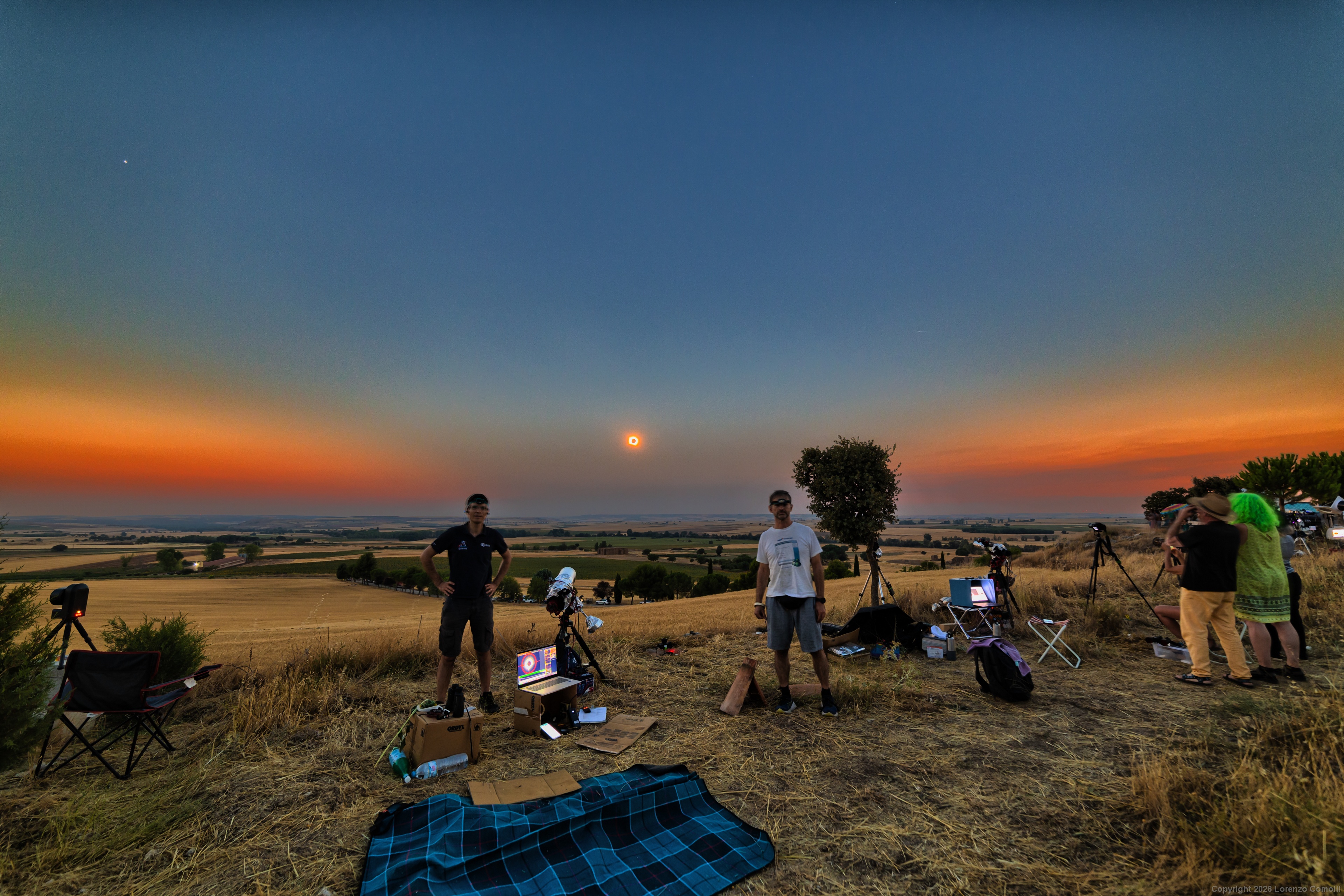

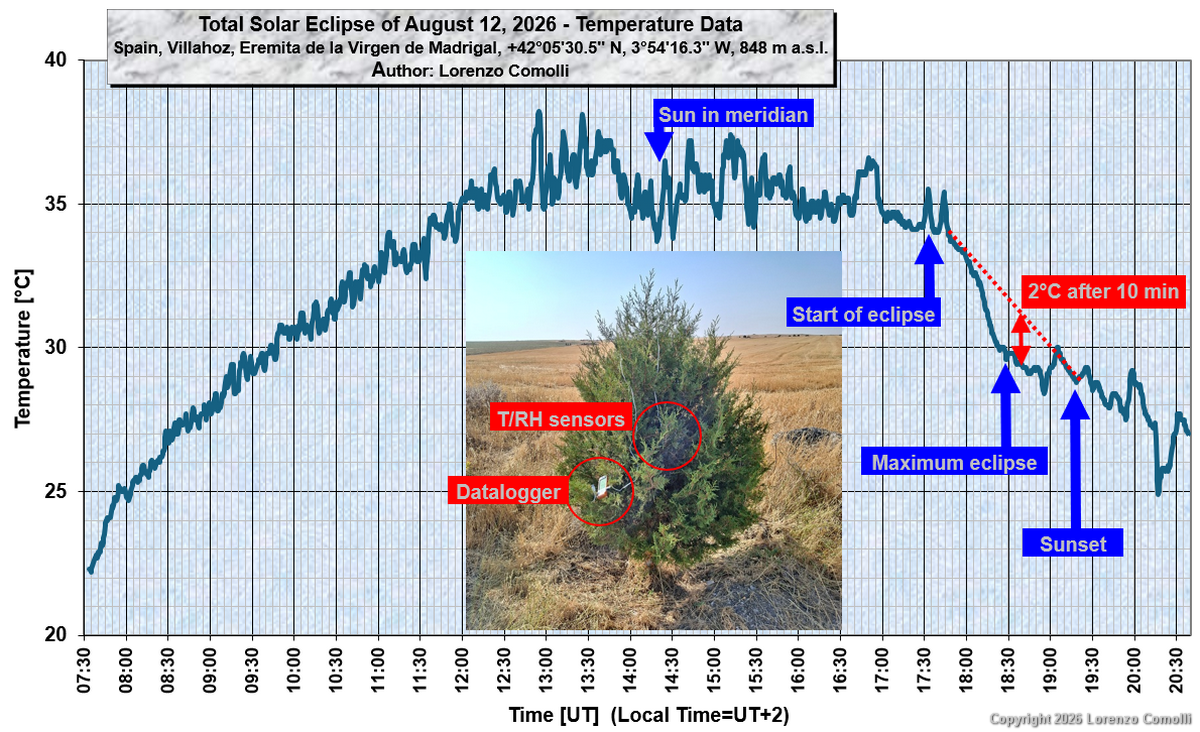
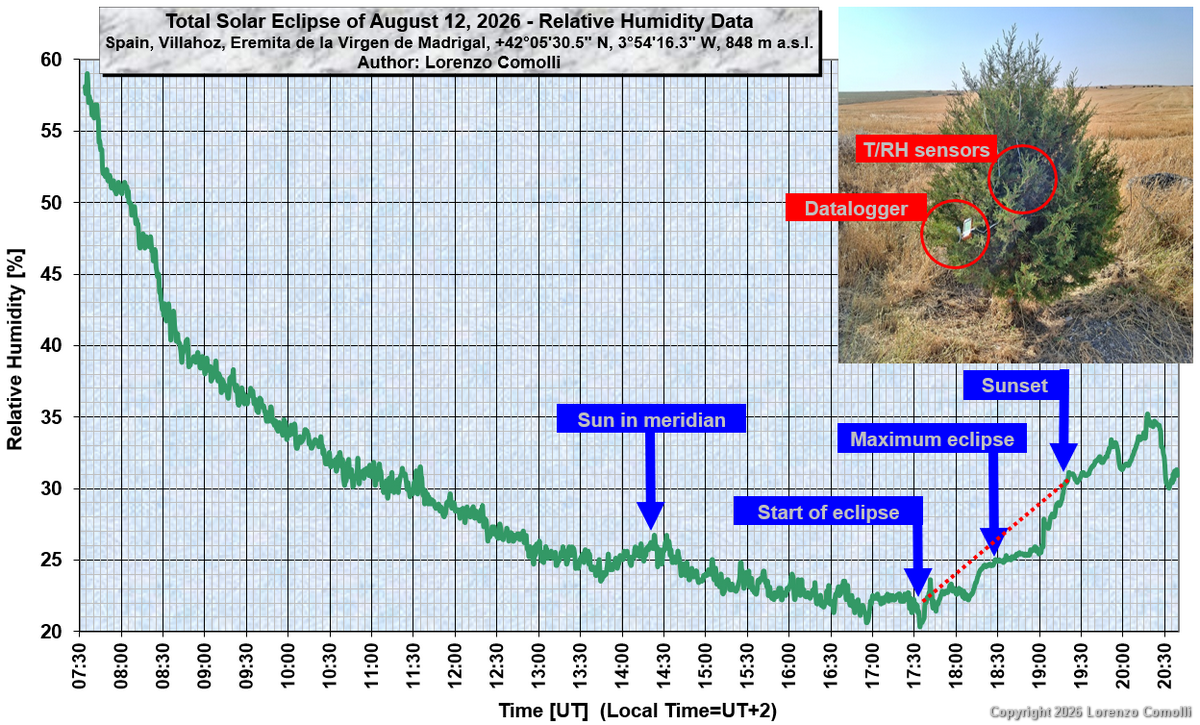
For this event, I used a
T/RH datalogger with the sensors positioned 1 meter
above the ground on a small tree, with sensors shaded
from direct sunlight.
During this eclipse, I recorded a temperature drop of
only 2°C compared to the baseline trend, versus 5°C in
Arkansas (2024), 9°C in Wyoming (2017), 4°C in Egypt
(2006), and 7°C in Hungary (1999). Clearly the eclipse
near the horizon greatly reduced the temperature drop.
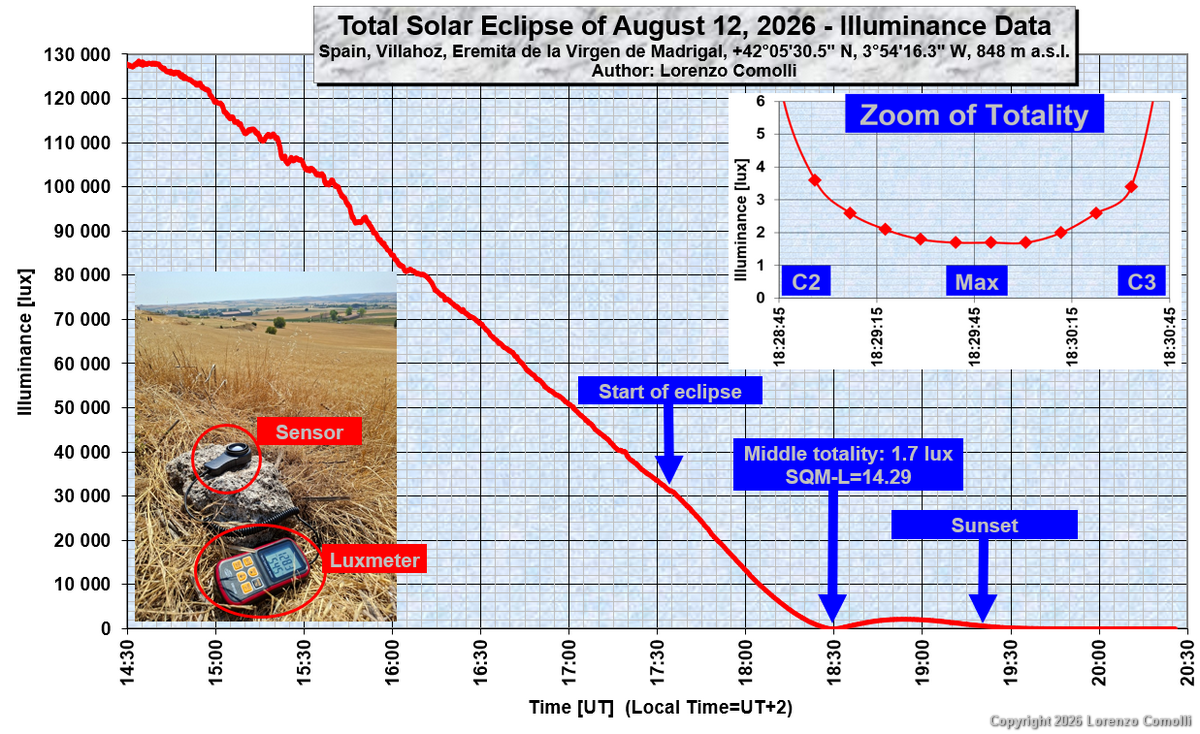
A digital luxmeter
measured the horizontal luminance: this is a really
interesting measurement, which shows the tremendous fall
in light, dropping between full Sun at 30000 lux at C1
and totality at only 1.7 lux (to be compared to 1.8 lux
in Arkansas 2024, 3.4 lux in Wyoming 2017, 4.1 lux in
Egypt 2006). This is the lowest value among my
historical measurements, clearly due to the low altitude
Sun, although I expected an even lower value due to the
Sun's low altitude; this is nearly similar to Arkansas
2024 with the eclipse very high in the sky. Maybe the
shorter duration of the totality (only 1 min 45 s) was
the key factor. Further analysis needed!
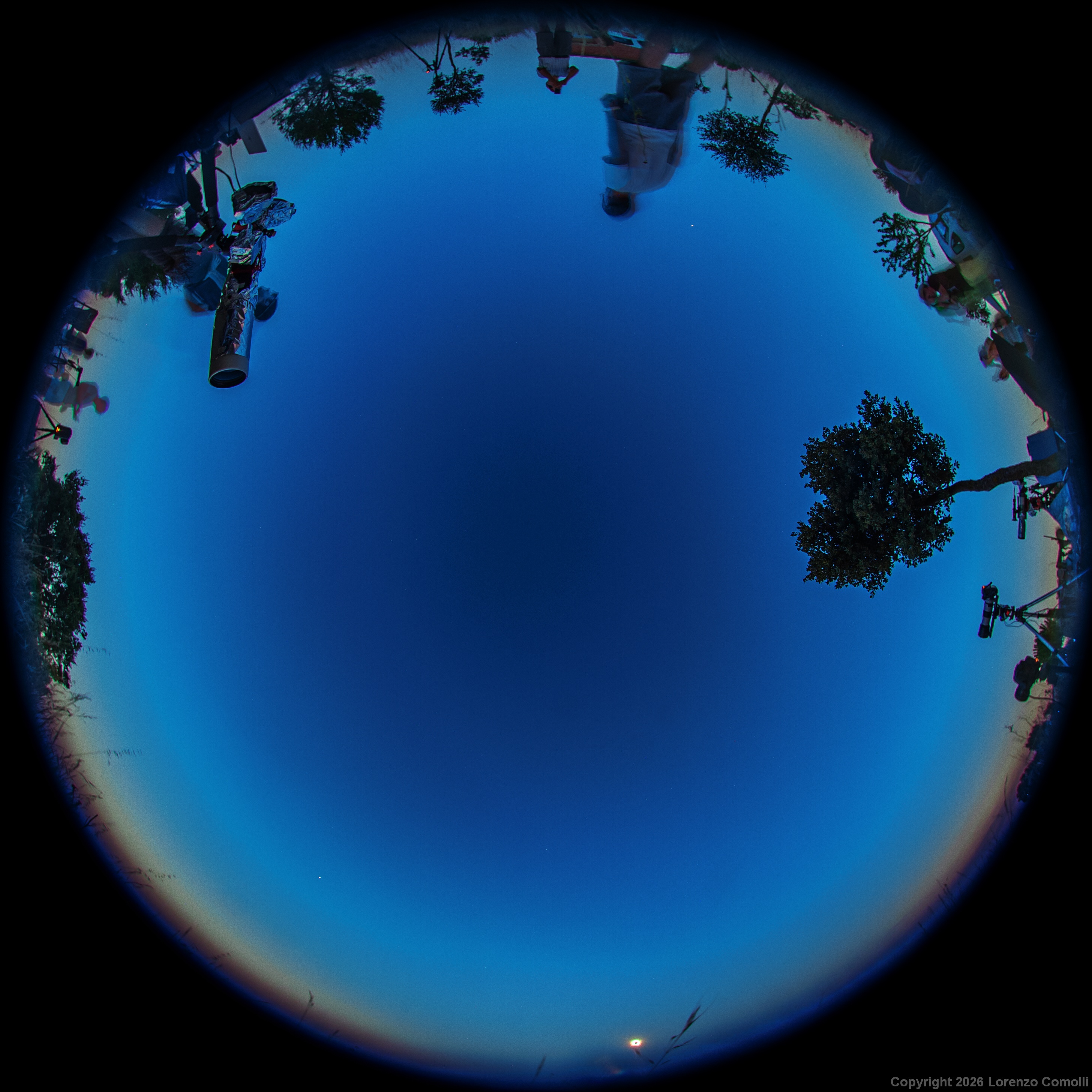
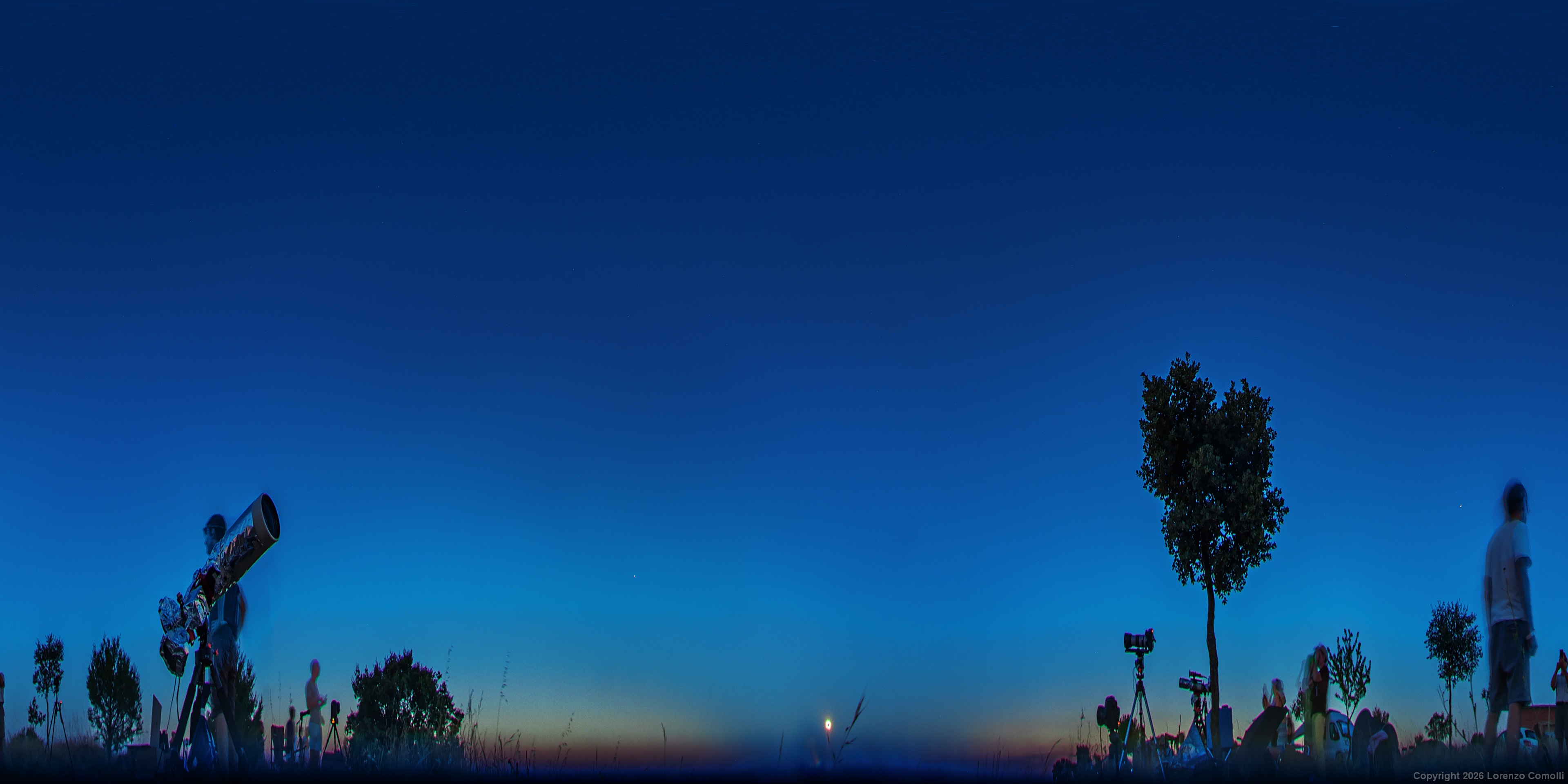

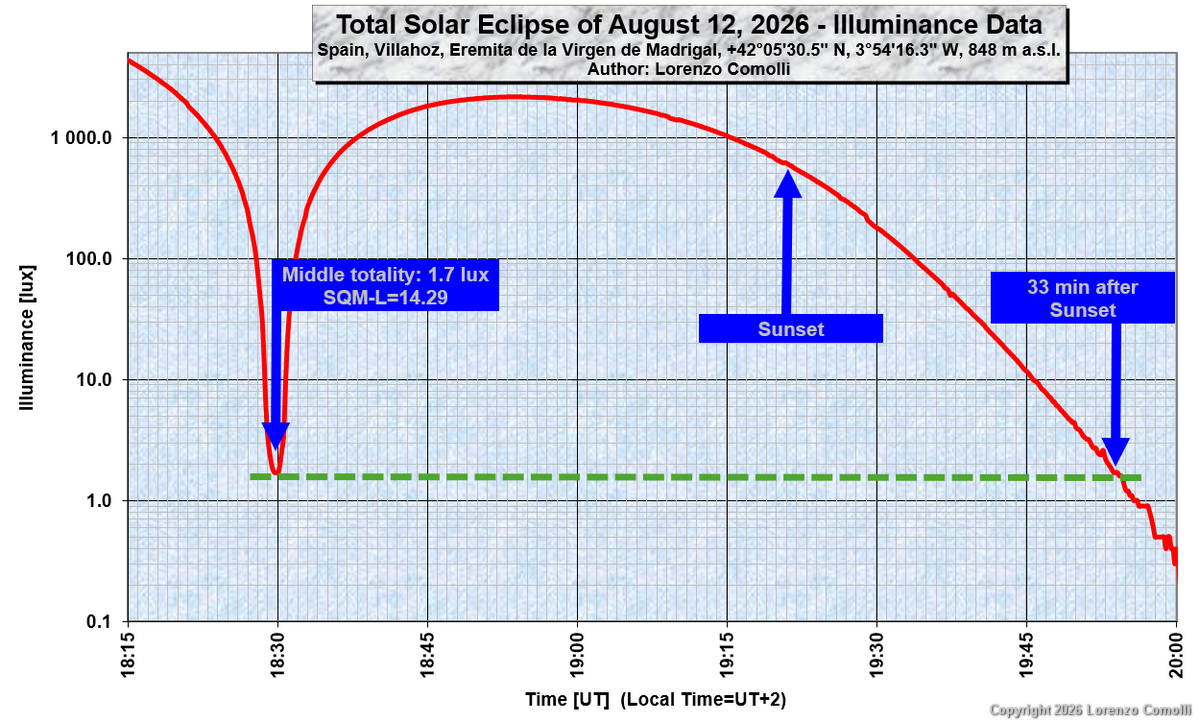
During totality I
measured the sky brightness with an SQM-L, obtaining
14.29 mag/arcsec², which is equivalent to the twilight
sky when the Sun's altitude is -6°, i.e. civil twilight. Want to know how dark the sky
gets during totality? Just wait for civil twilight—about
30 minutes after sunset!
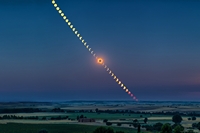
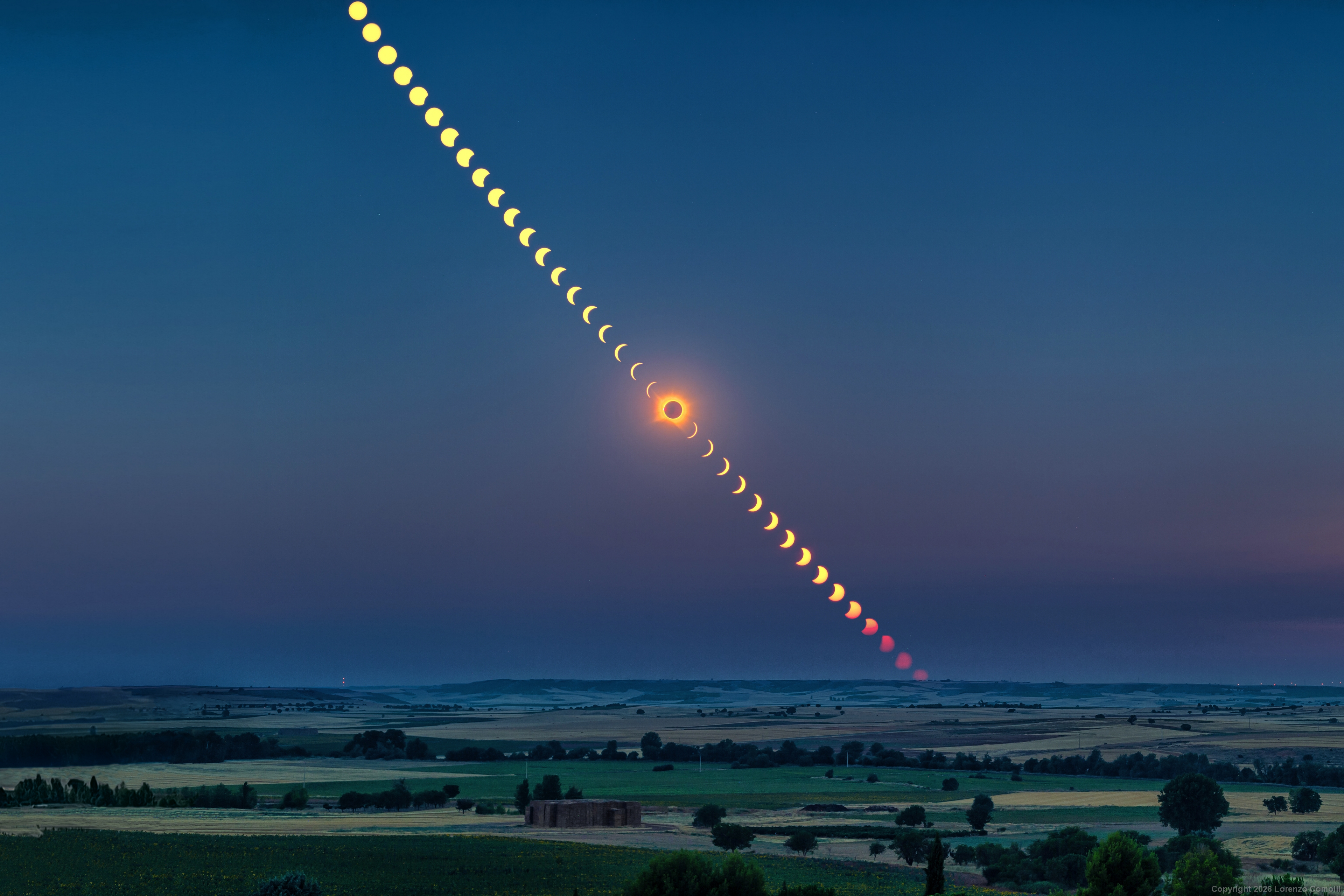
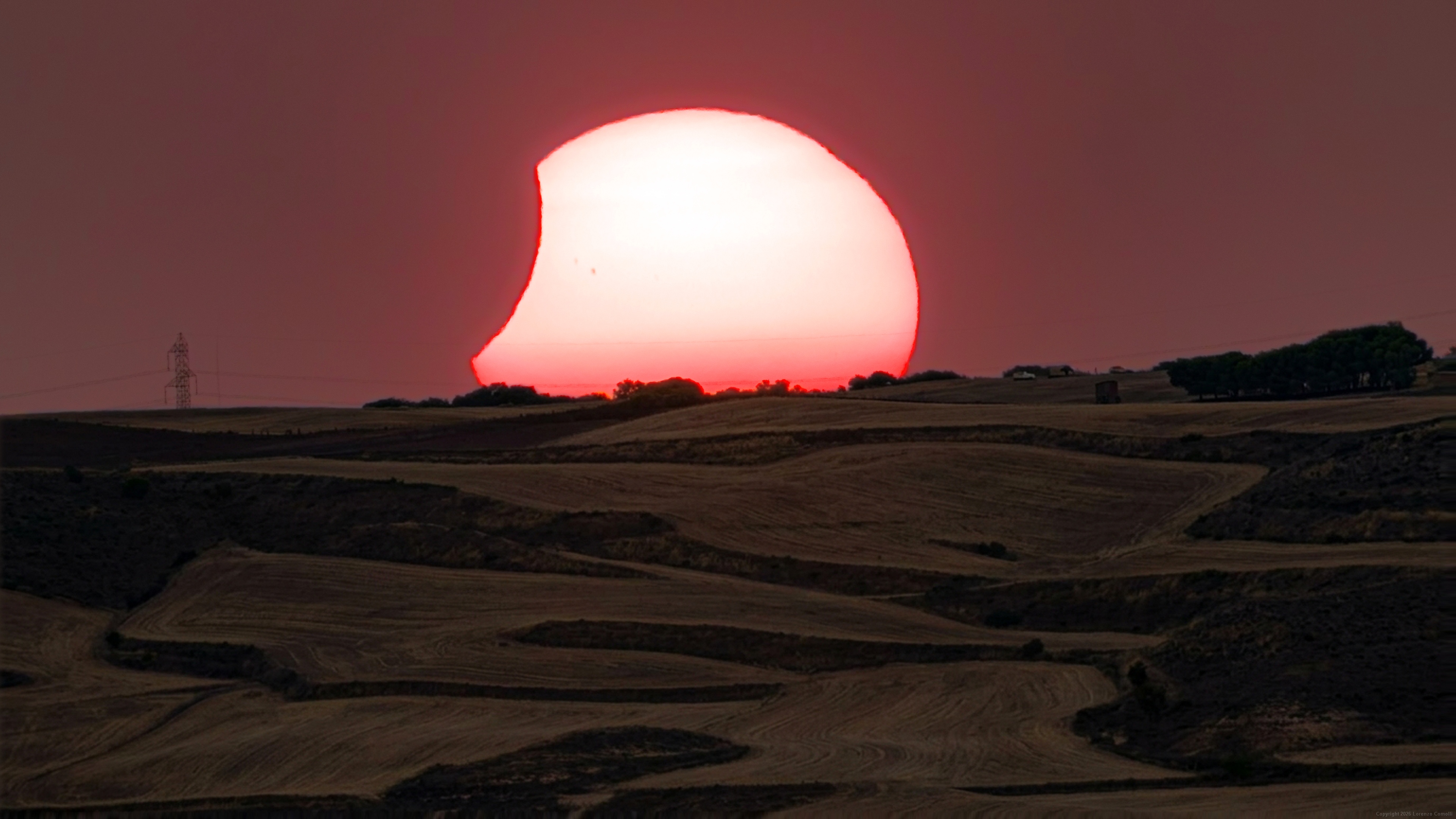
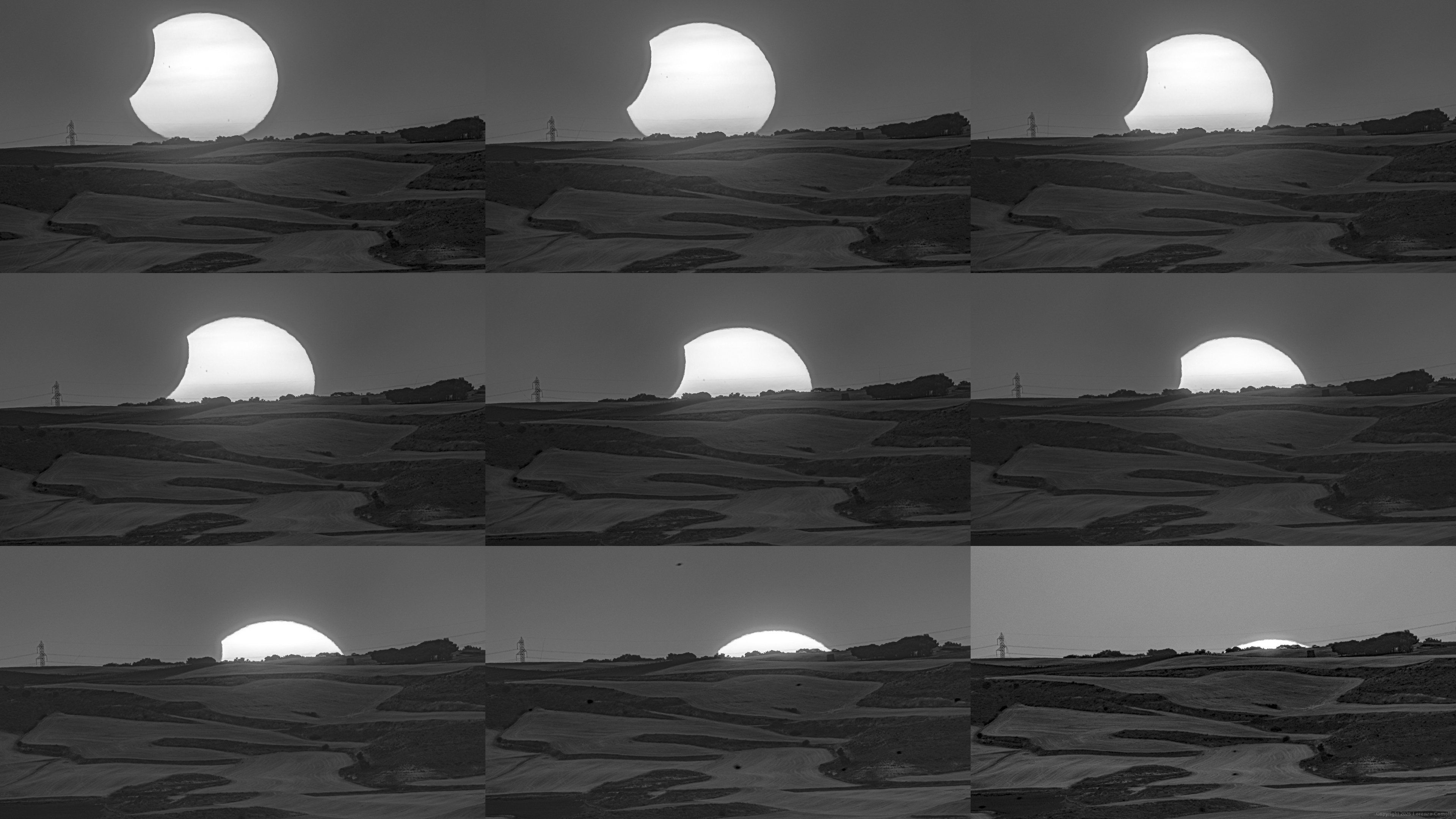


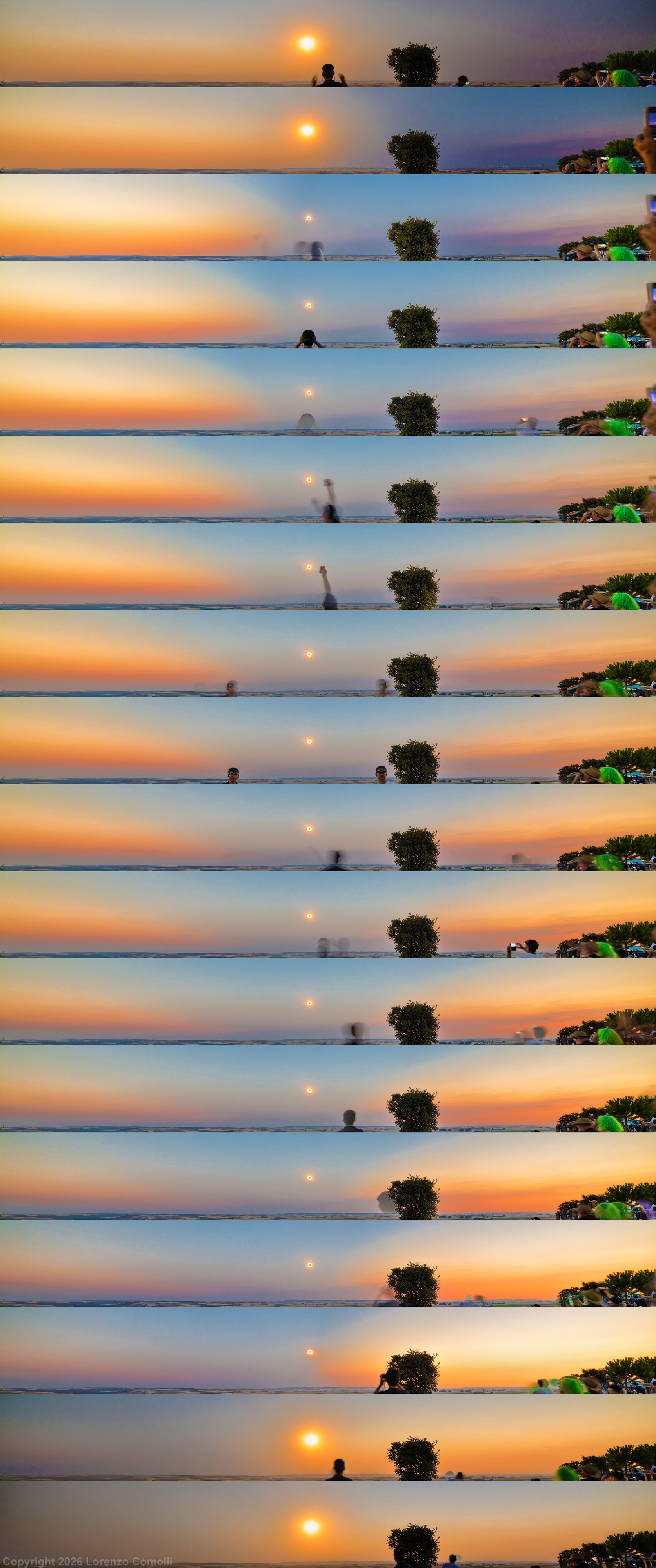
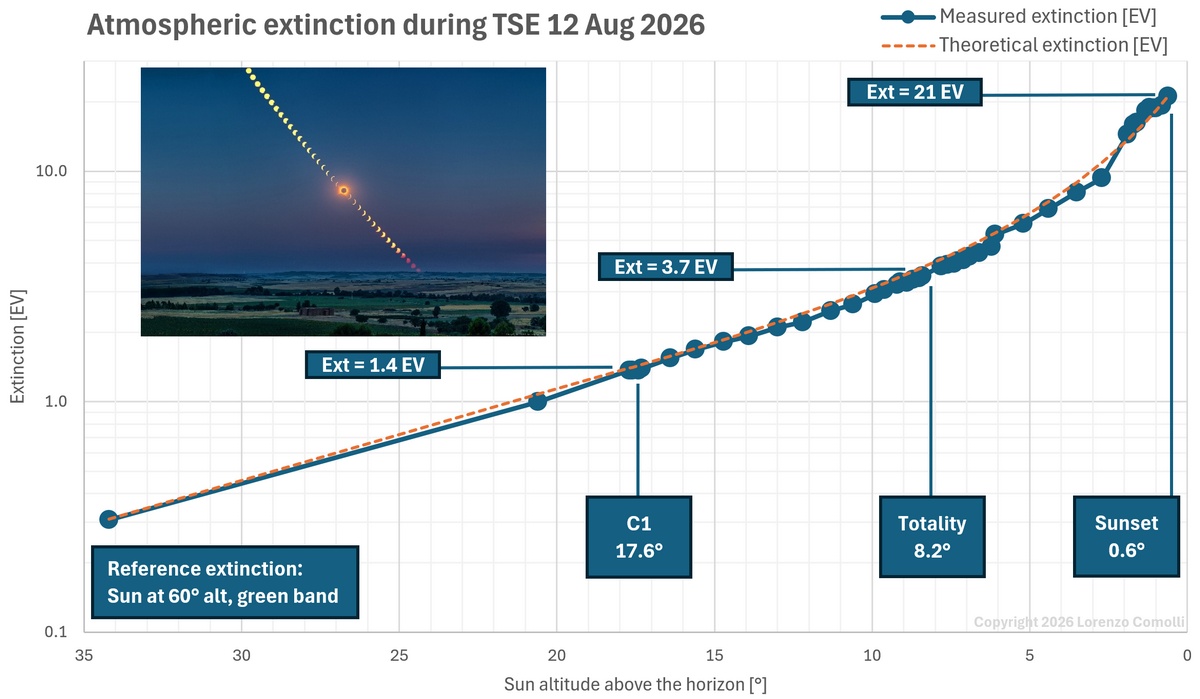
This eclipse was very low above the horizon (8.2° at my
location), so I tried to measure the atmospheric
extinction based on the brightness of the solar disk
during partial phases. I measured a value of 3.7 EV
during totality, which is much higher than what I
expected (1.4 EV) considering standard extinction models
and the extinction I had measured at my home location
the month before with the Sun at the same altitude. The
haze that day was probably particularly heavy, though
fortunately without any unsightly linear gradients that
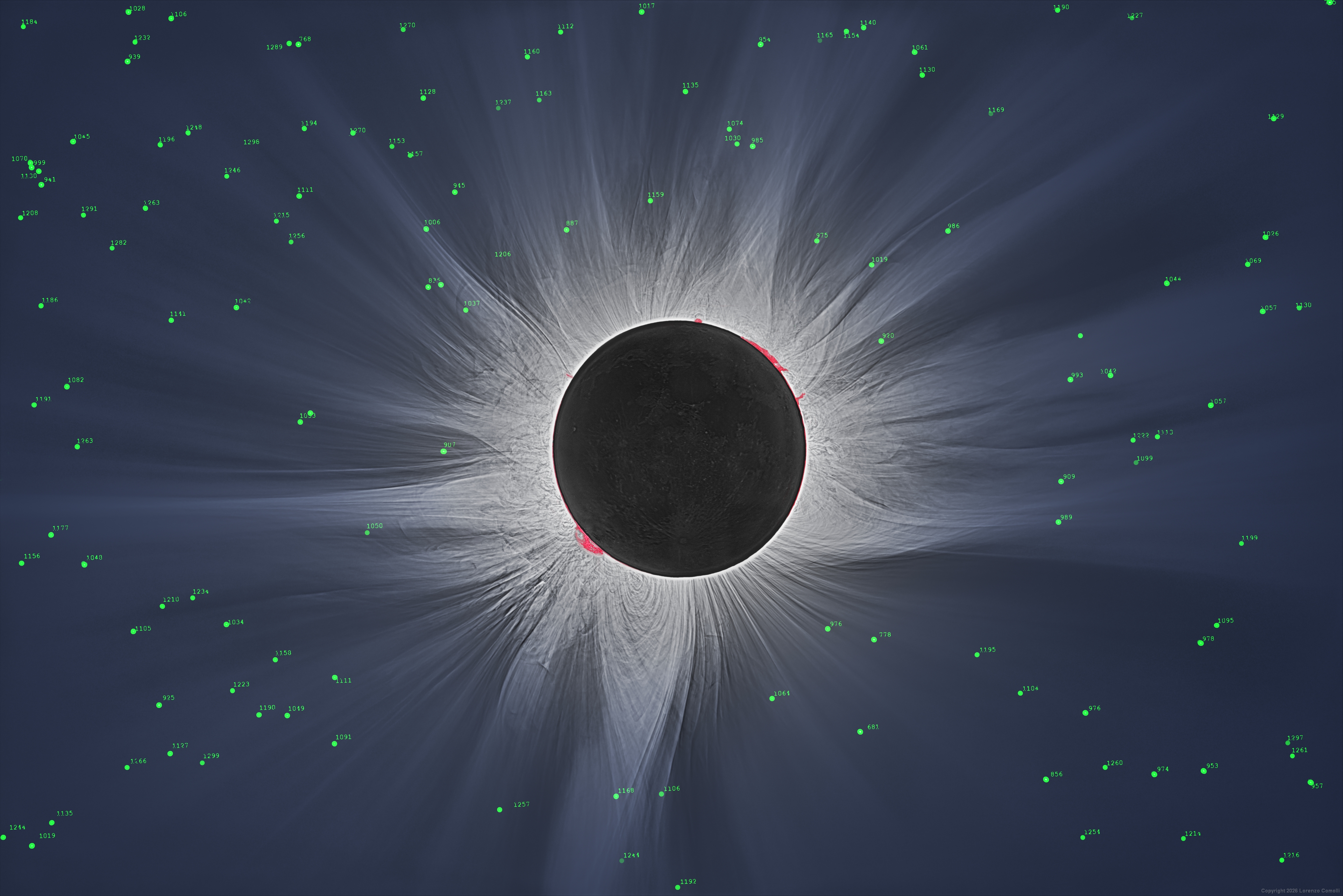
would have affected the totality imaging. The ability to
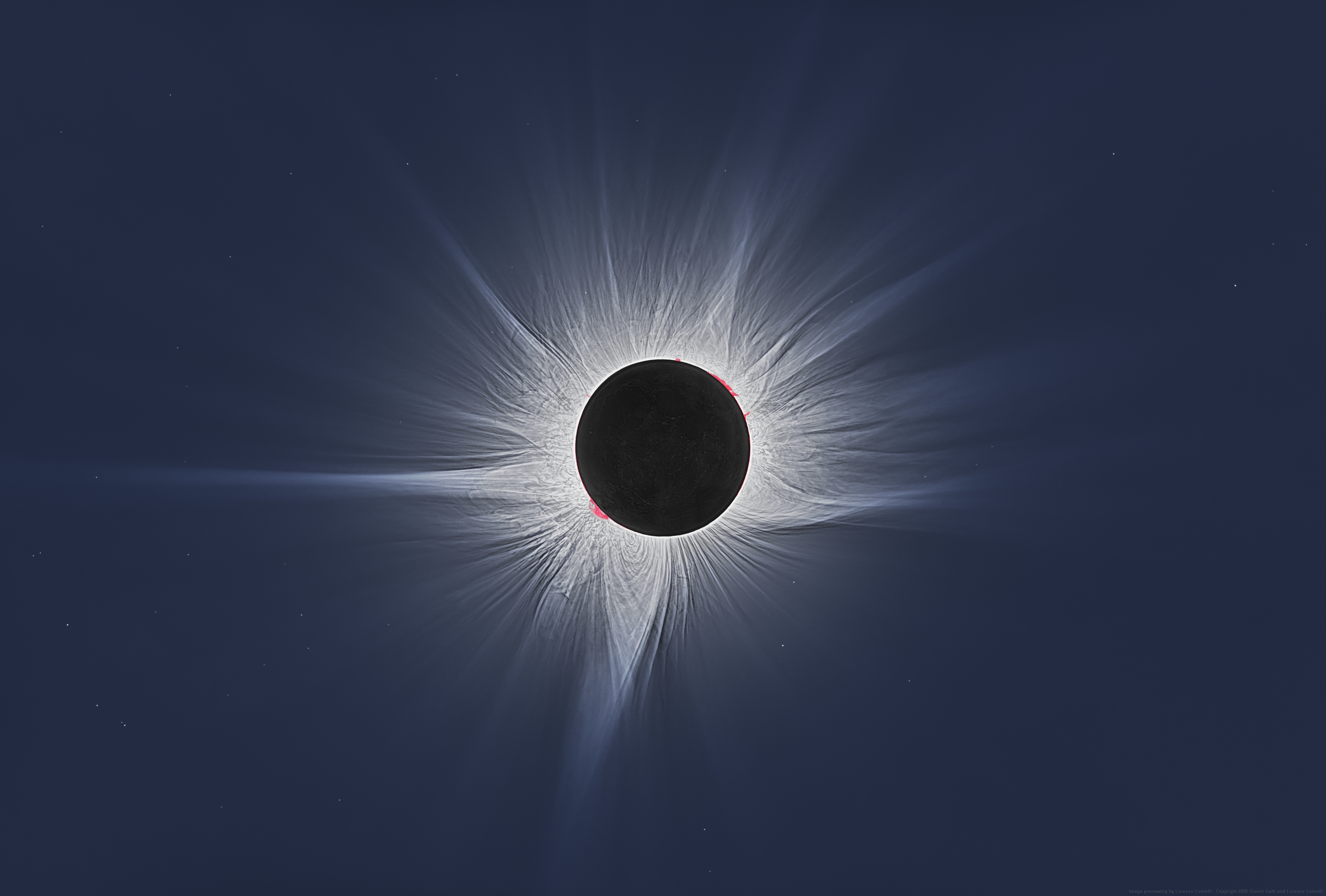
capture so many stars down to magnitude 12 is therefore
even more incredible..
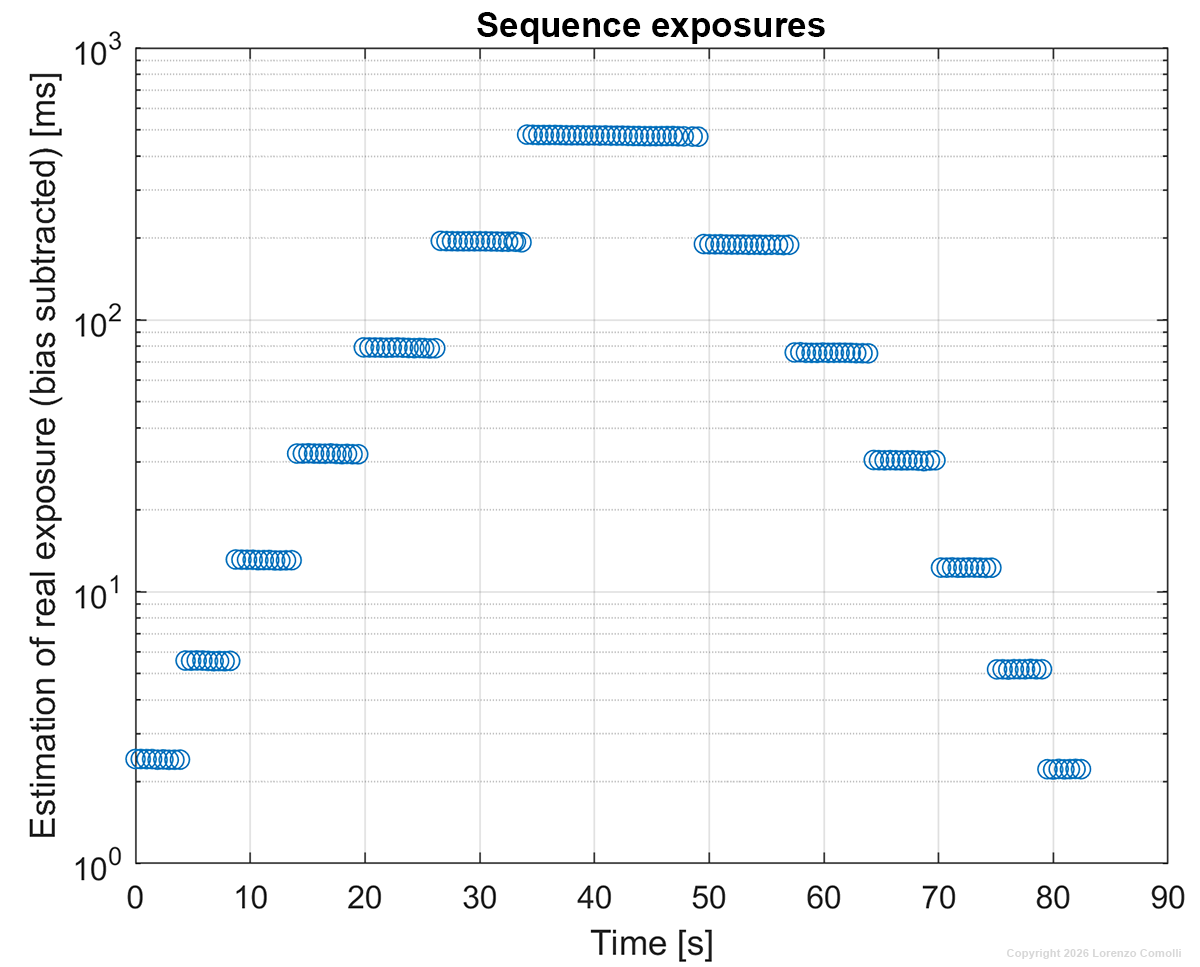
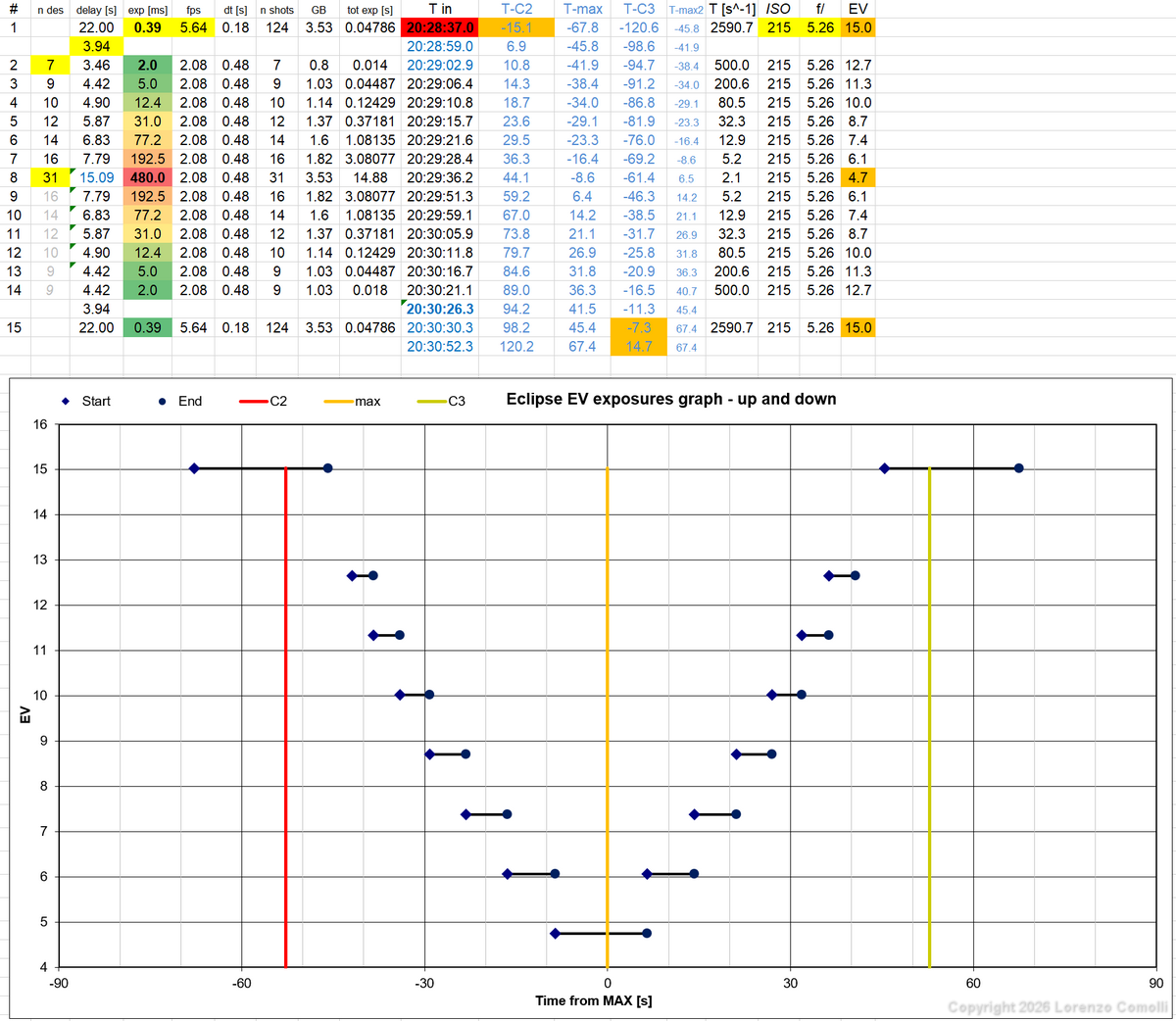
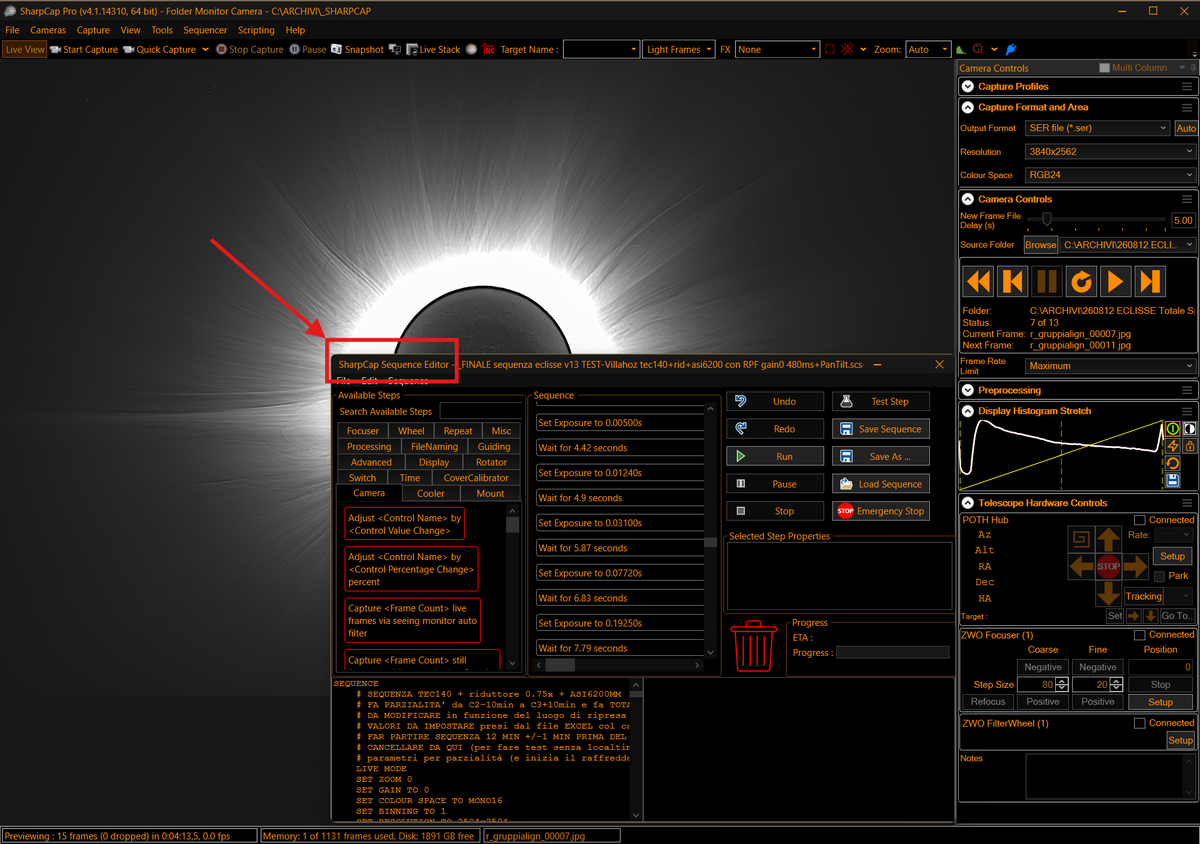
Here are the plots of:
|