Heart Nebula mosaic - IC 1805

Click on the image for high-resolution version. MOUSE OVER for the starless HOO view.

Hires links: Stars+Nebulae HOO , Nebulae only HOO Stars+Nebulae RGB , Nebulae only RGB , H-alpha starless , OIII starless.

The Heart Nebula (IC 1805) is a relatively bright and large emission nebula in Cassiopeia, near the border with Perseus. Most of its emission is in H-alpha (red), but it also shows a significant amount of OIII (green-blue).

Because the nebula is larger than my field of view, I decided to create a two-panel mosaic. Even so, some outer regions remain outside the frame, but the “heart” is fully captured.

The two panels were taken approximately two years apart: the northern panel in 2023 and the southern one in 2025.

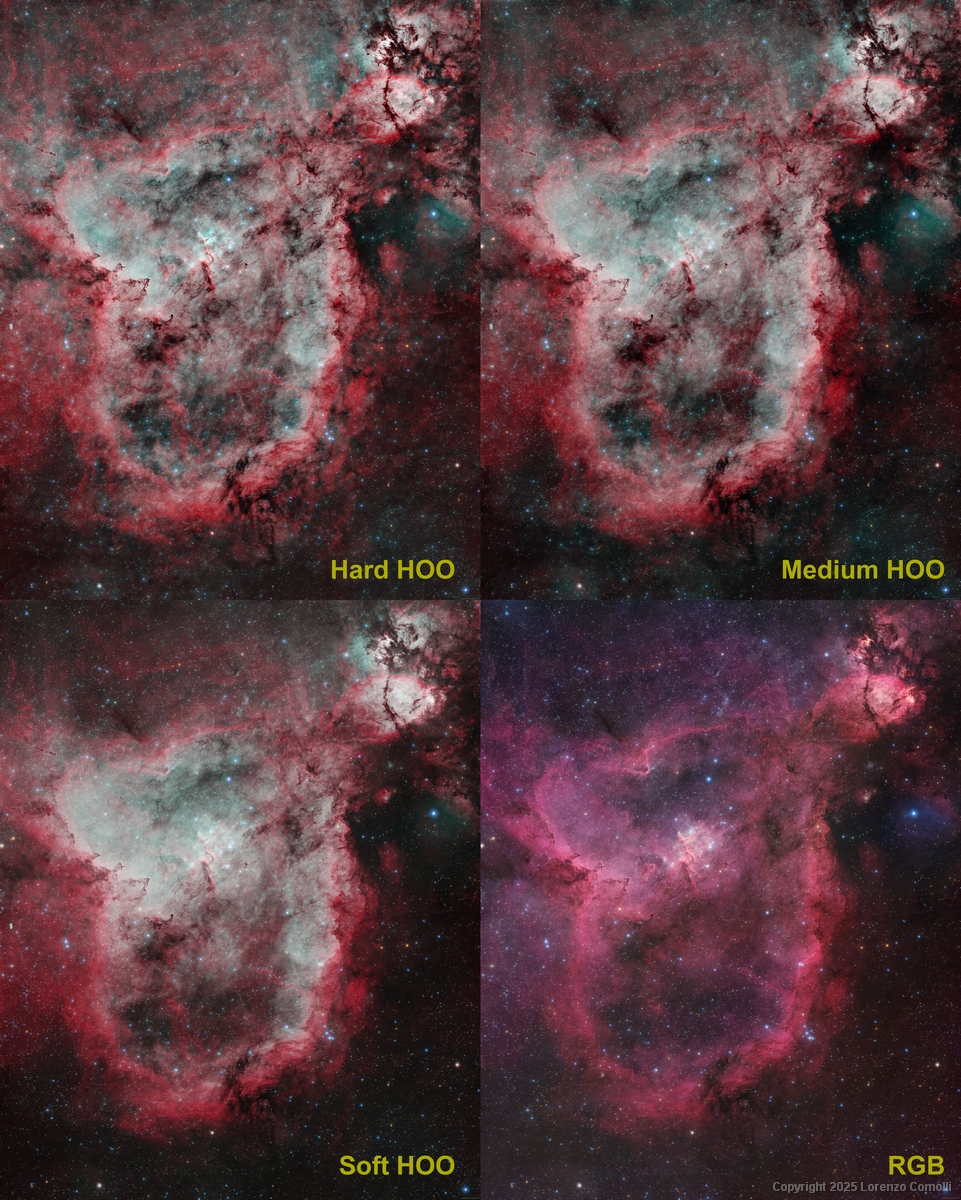
I am presenting the results both in HOO (bicolor Ha + OIII) and RGB. The RGB version uses only about 2 hours of exposure out of the total 17 hours collected; I was surprised that such a short RGB integration still produced a decent result of the nebula. The nebula colors of the HOO and RGB versions differ significantly, likely due to additional broadband and narrowband emissions that are not captured by Ha and OIII filters. Any feedback or deeper insight would be greatly appreciated—feel free to email me!

The processing is similar to my previously published images (CTA 1 and California). In short: StarNet++ for star removal from the narrowband channels, NoiseXterminator for noise reduction (thanks to Emmanuele Sordini!), and the addition of stars captured with short RGB exposures.

For this image, I also used a new and excellent feature in Siril 1.4: mosaic alignment and distortion correction through plate solving. It works almost miraculously, even with a small overlapping area between panels. See tutorial "Mosaics", help "Stacking" and video tutorial "Creating Mosaics with Siril!".
.
Technical Data
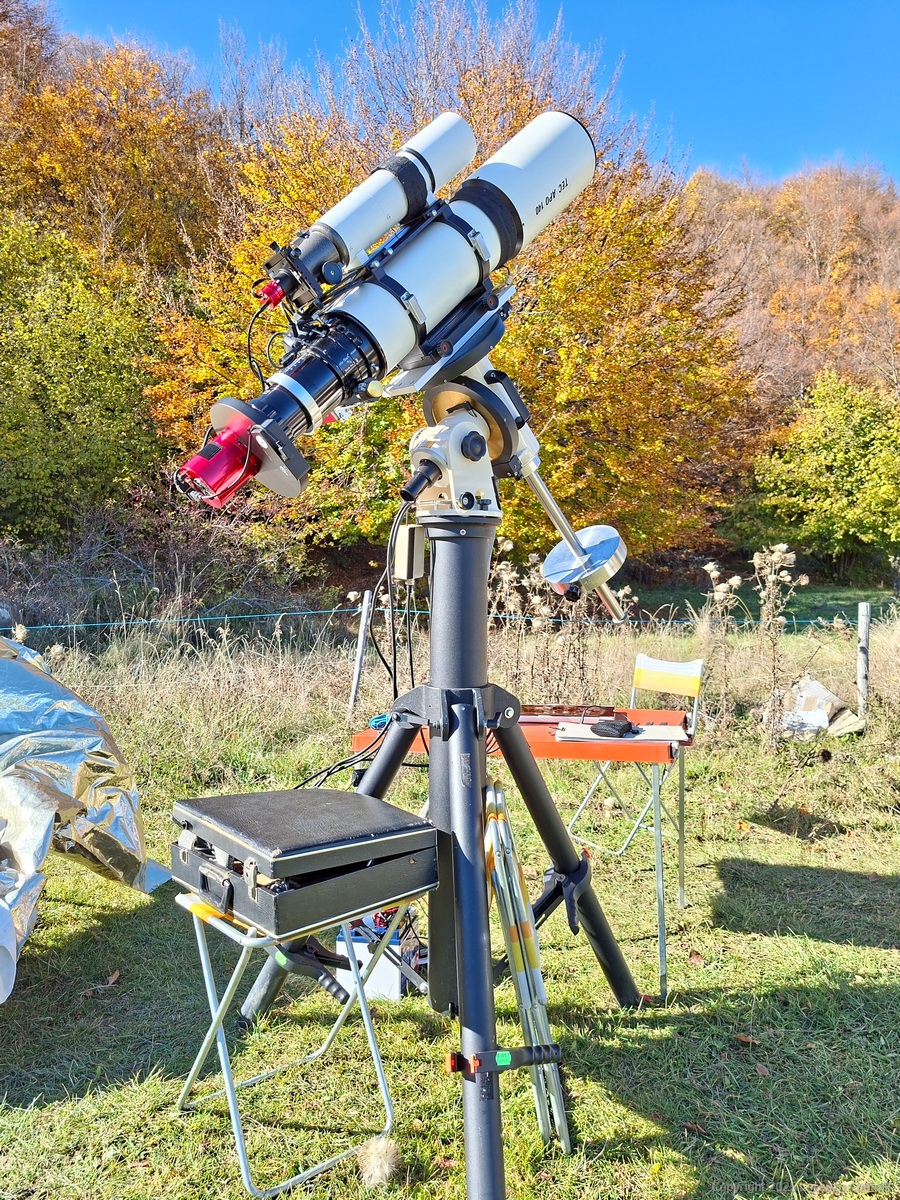
Optics TEC 140
Focal Length
1011 mm
Focal Ratio f/7.2
Exposure Time Total 17 h 15 min, composed of Ha-OIII-RGB(10 min subs for Ha and OIII, 5 min for RGB)
North panel:  280:190:20:20:20, total 8 h 50 min
South panel:  220:210:25:25:25, total 8 h 25 min
RGB only: total 2 h 15 min

CCD North panel: ZWO ASI 6200 MM @-25°C bin 1x1
South panel: ZWO ASI 6200 MM @-15°C bin 2x2
Location Pian dell'Armà, "pratone dei Milanesi" (PV, Italian Apennines), altitude 1350 m
Date
North 17 November 2023 and South 23 October 2025
Mount Gemini G-41
Tracking ZWO ASI 174 mini on an 80mm f/5 refractor
Temperature and humidity T= 0 °C, RH=40 % and T= +1 °C, RH=80 %
Sky brightness at zenith (with SQM-L) 21.2 mag/arcsec^2
Notes Image acquisition with SharpCap

Comparison of processing strength (HOO in hard, medium, soft, and RGB only). The main processing difference in HOO is the use of AHE (Contrast-Limited Adaptive Histogram Equalization, a filter in Siril 1.4: hard is with parameters 16-4, medium 8-2, soft none).
Here are the hires of each panel: hard, medium, soft, RGB. Please email me what you prefer.


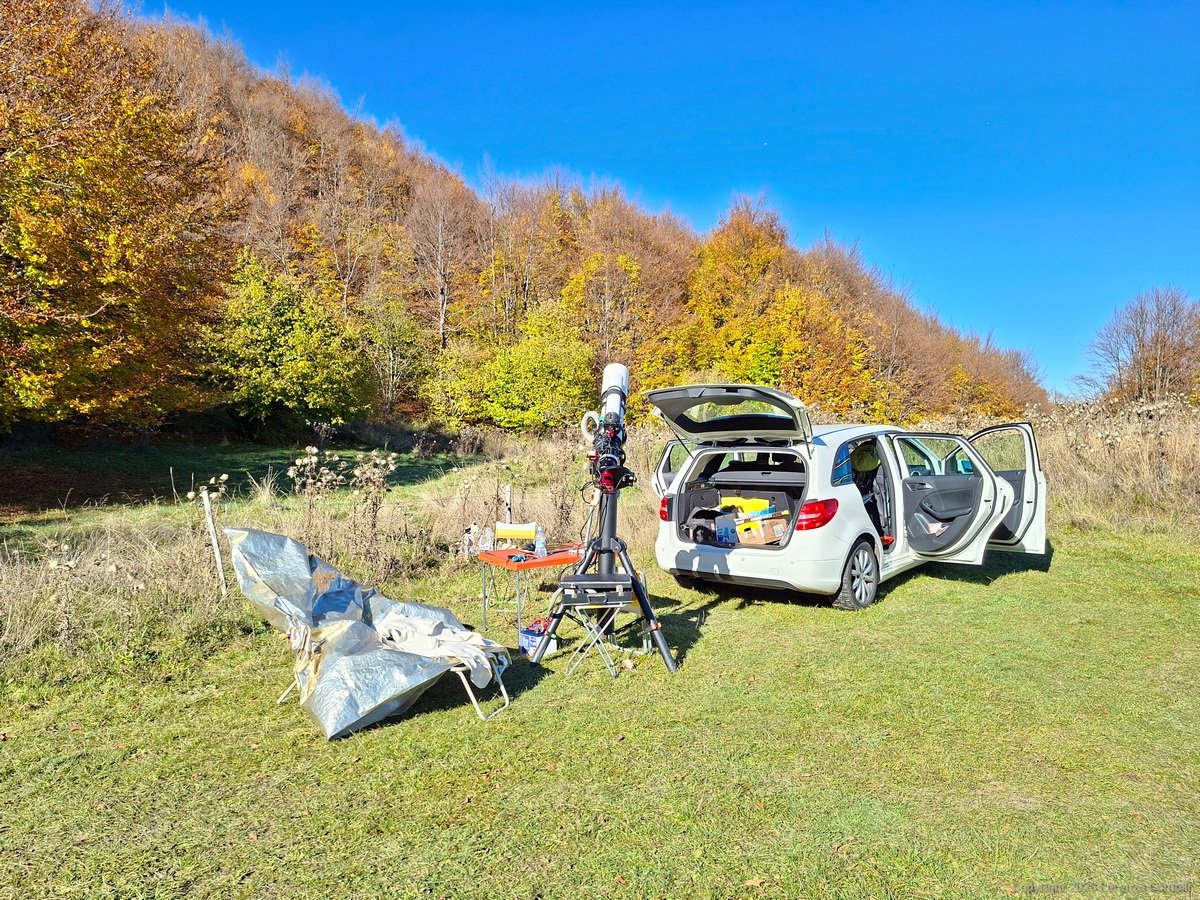
Below are a few additional shots from the field

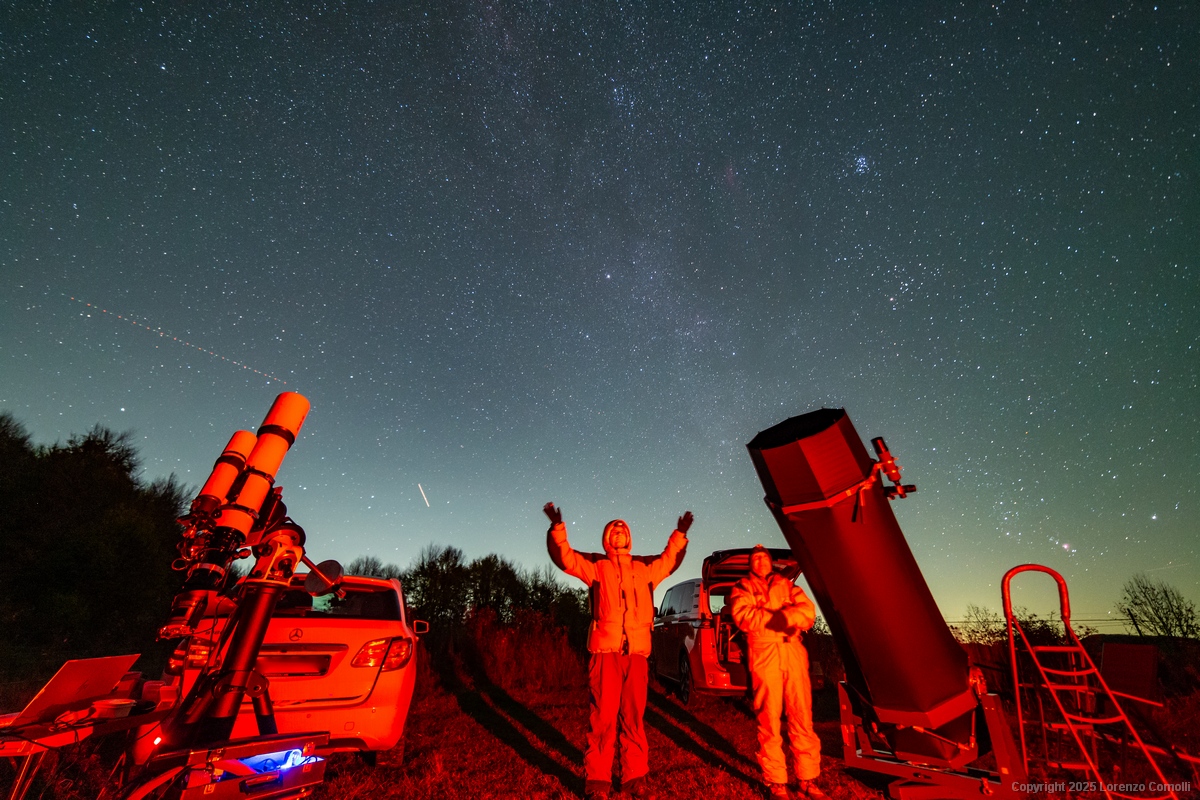
Piero Mazza and me in the middle of the night with his incredible 71 cm f/3.3 Dobsonian, built by Reginato and transported in his wonderful Volkswagen ID.Buzz, a fully electric van.


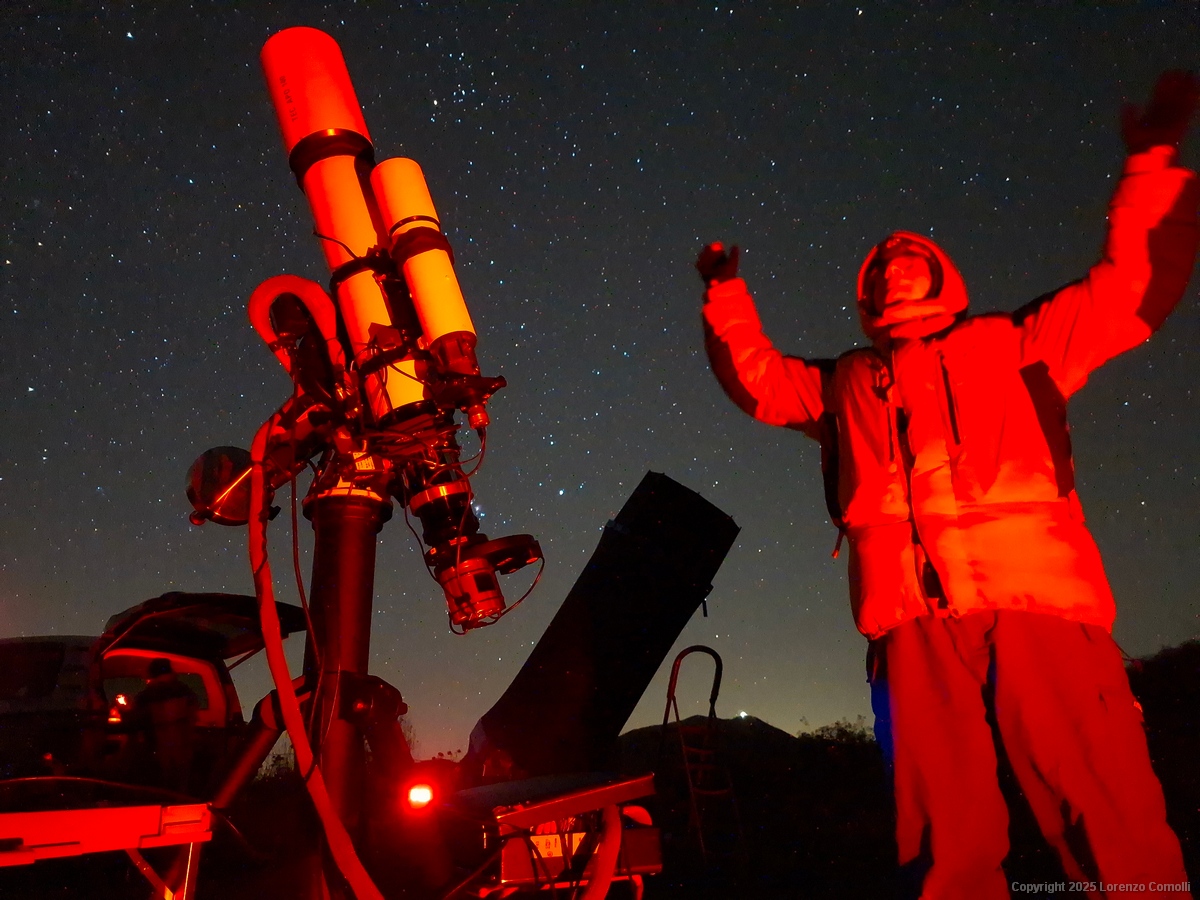
My setup in action, with Piero’s Dobsonian in the foreground. Photo taken with a Samsung A56 smartphone, 10 s exposure.


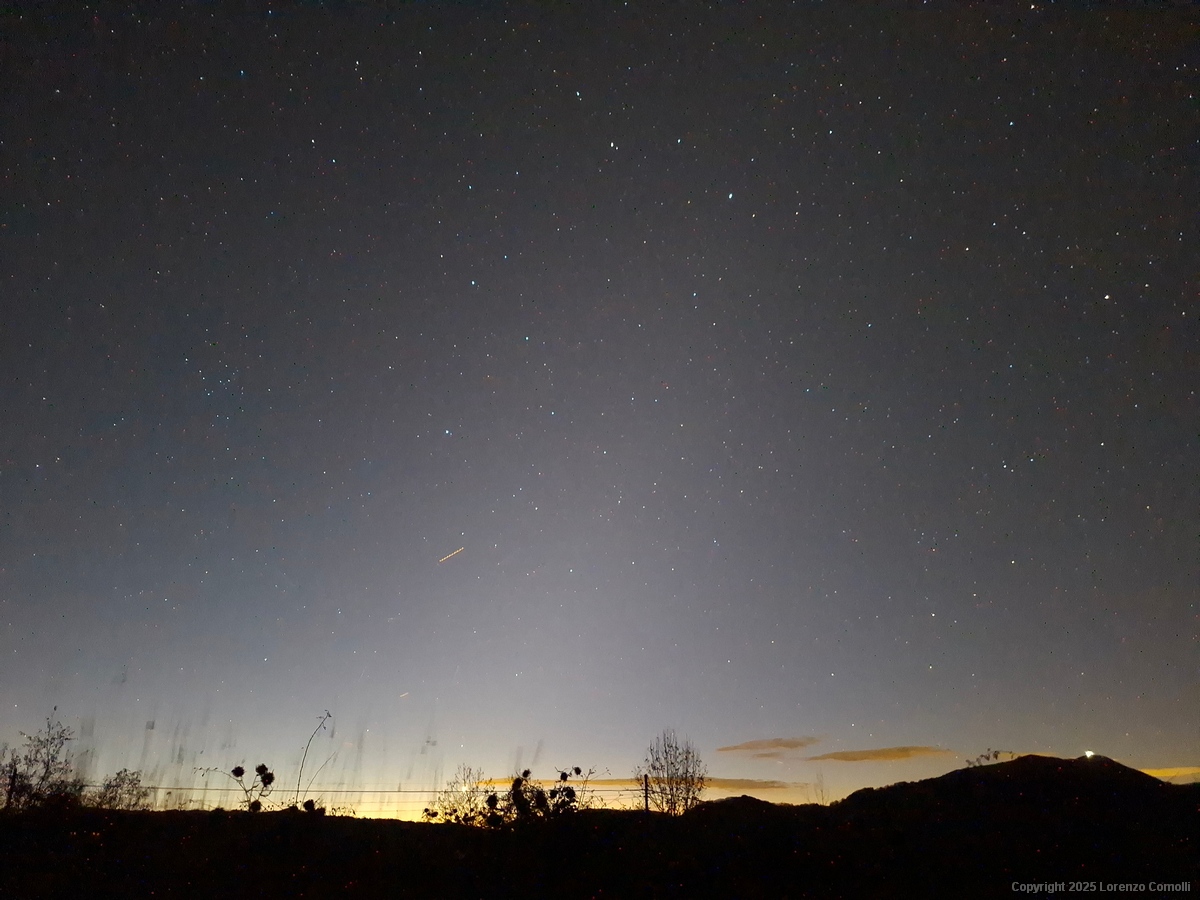
Zodiacal light on the eastern horizon at the end of astronomical night. Samsung A56 smartphone, 10 s exposure.
 

The area known as the "pratone dei Milanesi"


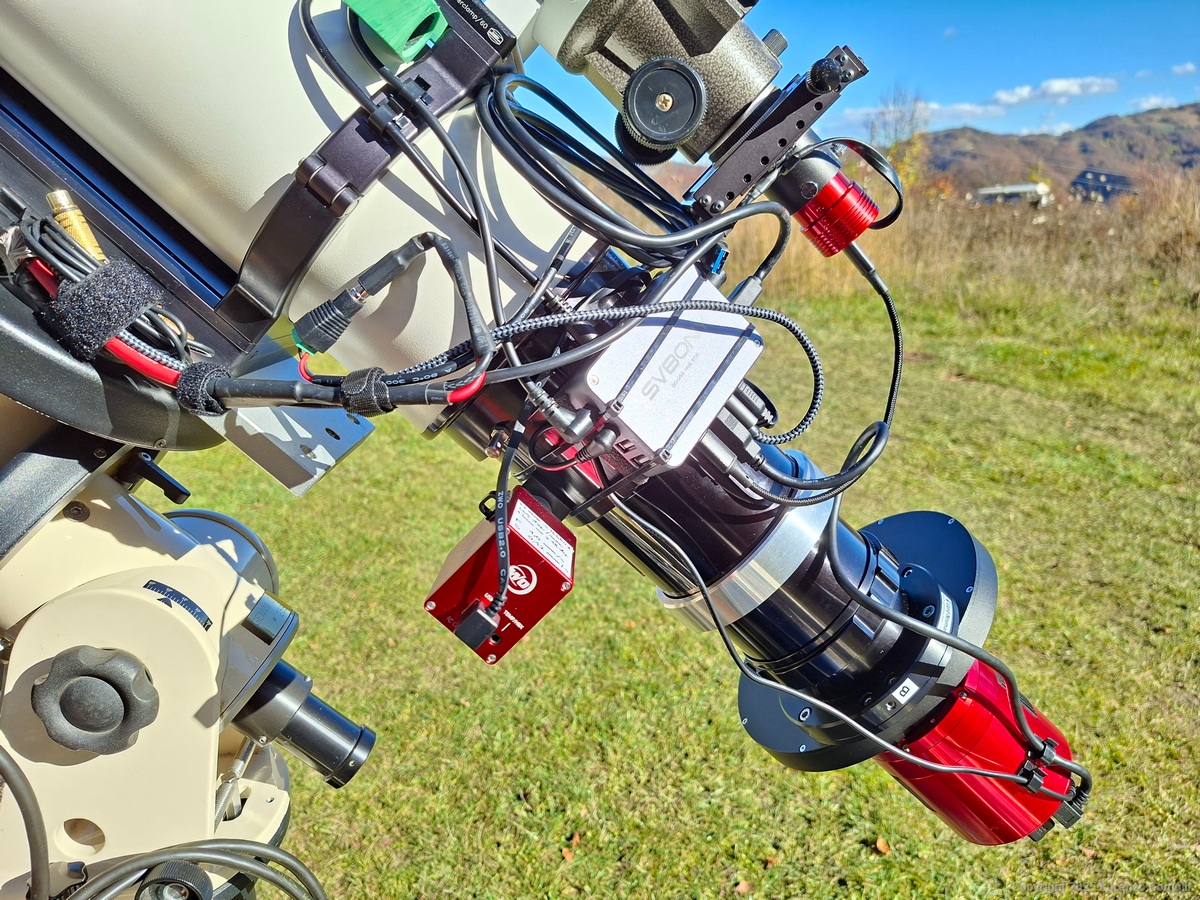
Updated setup with Svbony SV241 (USB and power hub), which greatly improved cable management.


HTML Editing and Publishing by Lorenzo Comolli. Email me at comolli@libero.it.
Back to Main Page